
You've been there. You walk into Goodwill hoping to score something great, and all you find are empty racks and picked-over shelves. It's frustrating.
The question "when does goodwill restock" runs through your head while you wonder if you're just unlucky or doing something wrong.
The truth is, Goodwill doesn't operate on a single fixed restock schedule. As of 2026, each store runs on its own rhythm based on local donation flow, staffing, and processing capacity. Understanding how that rhythm works is the difference between coming home empty-handed and walking out with finds that make your friends ask where you shop.
The Problem: Showing Up at the Wrong Time
The shelf you're staring at isn't empty because Goodwill never restocks. It's empty because you're standing in front of it at the wrong moment.
Most shoppers treat a Goodwill run like a regular retail trip. They show up on a Saturday afternoon, browse for an hour, and leave disappointed. But thrift stores don't work that way.
The inventory cycle runs on donations, processing speed, and the behavior of other shoppers who know exactly when fresh merchandise hits the floor.
The result is a predictable pattern of feast and famine. The stores get new items constantly, but those items disappear quickly. Professional resellers and dedicated thrifters know the timing.
They're there when the carts roll out, and by the time you arrive, the best pieces are already gone.
Here's what makes it worse. There's no national standard. Every Goodwill district operates independently, and each store within that district has its own quirks.
A store in a busy city might process donations twice a day, while a rural location might only roll out new stock once. Without knowing which type you're dealing with, you're guessing.
The fix starts with understanding the process. Once you see how donations become shelf items, the timing makes sense.
Quick Answer
Goodwill restocks throughout each day as donations are processed and sorted. Most stores put out new merchandise at least once daily, with high-volume locations restocking twice. The best time to shop is early morning, right at opening, or during the late afternoon restock window.
Thursday through Sunday tend to be highest for fresh arrivals.
How the Restock Cycle Really Works
Every item on a Goodwill shelf starts as a donation. Someone drops off a bag of clothes, a box of books, or an old television at the donation bay. From there, it enters a processing pipeline that determines when you'll see it on the floor.
The first step is the initial sorting. Donations get assessed for condition and category. Staff and volunteers separate clothing from housewares, electronics from furniture, and anything damaged gets routed to recycling or the outlet.
This sort happens in the backroom, which means items don't appear on the sales floor immediately.
Next comes pricing and tagging. Each item gets inspected more closely, priced, and tagged with the store's color-coded label. That color system is how Goodwill tracks discount cycles.
The current week's color is full price, and the older colors drop in price as the rotation moves forward.
The standard color rotation cycle runs about five to six weeks. That means a tag color that was full price a month ago might be fifty percent off today. Understanding this cycle is critical because it tells you how old the merchandise is, which helps you predict when new items are coming.
The Backroom Bottleneck
The backroom is the heart of the operation. If the processing team is slow, shelves stay empty regardless of how many donations come in. If they're fast, fresh items hit the floor quickly.
High-volume stores often have dedicated staff working the backroom continuously during business hours. They process donations in batches, wheel fresh merchandise to the floor, and return for the next load. This creates a rolling restock pattern throughout the day.
Lower-volume stores might only have one or two people handling donations between their other duties. That means restocks happen less frequently, often only once in the morning and once in the afternoon. The exact timing depends on when the trucks arrive and how quickly the team works.
The Donation Lag Time
Here's a number you need to know. Most donations take one to three days to travel from the drop-off bay to the sales floor. That's the average processing time across typical store operations.
Donations dropped off on a Monday might not appear until Wednesday or Thursday. Weekends are busier, so items dropped off on Saturday might not hit the floor until Tuesday. This lag creates the restock patterns you can actually predict.
If you know when donations tend to arrive at your local store, you can calculate roughly when the processed items will appear. That's the real secret to "beating" the system. It's not about luck.
It's about understanding the pipeline.
What a Restock Actually Looks Like
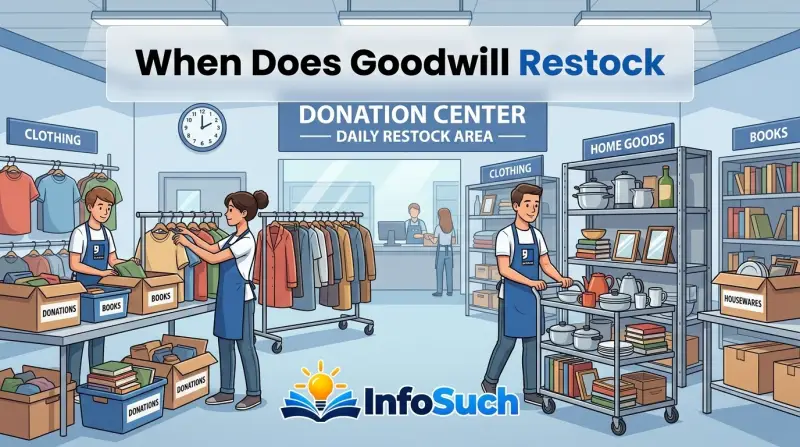
When staff bring new merchandise to the floor, it's not a single dramatic moment. It's a steady flow. Workers wheel out carts or rolling racks filled with sorted, priced items and hang them on the rails or place them on the shelves.
Seasoned thrifters watch for this activity. They notice when the backroom door swings open and a cart emerges. They position themselves nearby so they can browse the new items before anyone else.
This is why opening time matters. A store that opens at 9:00 AM typically has a fresh batch ready from the previous day's processing.
Condition Variable #1: Store Location
Not all Goodwill stores are created equal. Location drives every restock factor, from donation volume to merchandise quality to shopper competition. If you're shopping at a single store without understanding its location profile, you're flying blind.
Urban stores in dense city neighborhoods see constant foot traffic and regular donation drops. People are always moving, decluttering, and donating. These stores process inventory quickly to keep up with demand, often restocking multiple times per day.
The downside is competition. City stores attract more professional resellers, so fresh stock disappears fast.
Suburban stores sit in a middle ground. Donation volume depends on the neighborhood's demographics and the store's visibility. A suburban store near an affluent area will see higher-quality donations but might process them slower if staffing is limited.
These stores often have a predictable workflow, making them easier to time.
Rural stores face the opposite challenge. Donation volume is lower, which means restocks happen less frequently. But the competition is thinner too.
A rural Goodwill might not get daily fresh stock, so timing your visit around donation processing days becomes critical.
Income and Neighborhood Demographics
The character of the neighborhood directly influences what ends up on the shelves. Stores in higher-income areas receive better donations. Designer brands, quality furniture, and high-end electronics appear more often.
These stores attract more resellers, which means faster turnover.
Lower-income neighborhoods see higher donation volume in terms of quantity, but the quality of items shifts toward practical goods. Clothing, housewares, and everyday essentials dominate. The competition is less intense, but the stakes are also lower if you're hunting for high-value resale items.
The 50% off discount day shifts by district, but it's most commonly Saturday or Sunday. That's when casual shoppers flood the store, which means competition spikes. If you're serious about fresh stock, avoid these days unless the discount is your primary goal.
Condition Variable #2: Store Volume and Size
Square footage matters more than you'd think. A large destination Goodwill operates completely differently from a small neighborhood store. The physical space determines how much inventory can be displayed, which affects restock frequency and timing.
Big-box Goodwill stores, often located in former grocery stores or department stores, have massive floors. They can hold thousands of items at once, so they need a constant supply to keep racks full. These stores typically have larger processing teams and receive donation deliveries throughout the day.
You'll see multiple restock cycles.
Smaller stores, sometimes just a storefront in a strip mall, work on a smaller scale. They have less display space, so they can't put out as much at once. Their restock pattern is more sporadic, often tied to when the processing team clears a batch of donations.
Destination Stores vs. Neighborhood Shops
A destination store is one people travel to specifically. It's big, well-organized, and known for having a wide selection. These stores get more donations because they're easier to find and have dedicated donation lanes.
They also process faster because volume justifies more staff.
Neighborhood shops are the opposite. They're convenient for locals but don't attract the same volume. Donations trickle in, and the processing backlog stays small.
Restocks happen less predictably, sometimes just once a day or even every other day.
If you have both types within driving distance, the destination store is usually your best bet for fresh stock. The constant flow of donations means new items hit the floor more often. Just remember that more shoppers also know this, so you'll face stiffer competition.
The Outlet Difference
Goodwill Outlet stores are a completely separate beast. Also known as "The Bins," these locations sell unsorted merchandise by the pound. Items that didn't sell at retail stores get shipped here in large bins.
The Outlet restocks when new shipments arrive, not on a standard schedule. You might see fresh bins dropped every hour or two at a busy location, or you might wait several hours between drops. The chaos is part of the appeal, but it also means you need a different strategy.
At the Outlet, the best items go fast. Professional buyers crowd around the bins and grab pieces as soon as the staff rolls them out. You need to position yourself early and move quickly.
It's not for everyone, but the prices are unmatched for those willing to dig.
Condition Variable #3: Day and Time Patterns
The day of the week matters as much as the time of day. Donation volume spikes on weekends, which means the processing backlog grows. That backlog becomes fresh stock a few days later.
Here's a rough pattern that holds across most stores. Monday and Tuesday are typically slower days. The weekend rush has been processed, and new donations are just starting to trickle in.
Wednesday and Thursday see a pickup as midweek donations get sorted. Friday through Sunday bring the most donations, which means the following week's stock gets replenished.
Time of day matters too. Opening time is the most reliable window for fresh merchandise. Most stores process donations the previous day and roll that stock out in the morning.
If you're there when the doors open, you have first pick.
The Early Bird Advantage
Getting to the store 10 to 15 minutes before opening puts you in a strong position. You can watch the staff bring out new merchandise, position yourself near the best sections, and browse before the crowd builds.
The downside is that you're competing with other early birds. Resellers and collectors know this trick too. At busy stores, you might find a small crowd waiting at the door every morning.
The advantage goes to whoever moves fastest.
If you can't make the morning window, the late afternoon restock is your second chance. Many stores process a second batch of donations in the afternoon and roll that stock out between 2:00 PM and 4:00 PM. This window is less crowded but also less predictable.
Weekday vs. Weekend Shopping
Weekday mornings are the sweet spot for serious thrifters. The weekend crowds are gone, the store is quieter, and fresh stock from the weekend donation rush is hitting the floor. Tuesday through Thursday mornings are often the best balance of availability and competition.
Weekends are a mixed bag. Saturday brings the largest crowd and the highest competition. Sunday is slightly quieter, but the shelves are often picked over from Saturday's rush.
If you can only shop on weekends, aim for Sunday morning at opening time.
Holiday weekends are a different story. Donation volumes spike after major holidays like Christmas and New Year's, when people declutter their homes. The weeks following these holidays are prime hunting time, even if the stores are busier.
The Step-by-Step Guide to Catching Fresh Stock
Timing is only half the battle. You also need a strategy for being in the right place when the new merchandise appears. Here's a practical approach that works regardless of which store you're visiting.
Step 1: Identify Your Store's Profile
Start by determining which type of store you're dealing with. Is it a high-volume destination location or a smaller neighborhood shop? A quick visit on a Tuesday morning tells you a lot.
Count the number of carts staff bring out in an hour. Note the size of the donation drop-off area. The bigger the operation, the more frequent the restocks.
Step 2: Ask the Store Manager Directly
This is the most underrated trick in thrifting. Store managers know their donation patterns and processing schedules. A simple, friendly question like "When do you usually get new items out?" often gets a straight answer.
Many managers are happy to share the general rhythm, especially if you're a regular customer.
Don't ask on a busy Saturday. Go on a weekday morning when things are calmer and staff have time to talk. Be respectful, don't demand specifics, and you'll often get useful information.
Step 3: Learn the Color Cycle
The color-coded tag system tells you how old the merchandise is. Each week, a new color becomes the "full price" tag, and the older colors drop in price. If you know which color is current, you can estimate when new stock will appear.
The cycle runs about five to six weeks. If you see a tag color that's been on the floor for several weeks, it's close to being discounted. If you see the current week's color, that item was processed recently and the restock pipeline is active.
Step 4: Watch the Backroom Door and Donation Bay
You don't need to be obvious about it. Just pay attention. When the backroom door swings open, something is coming out.
When a car pulls up to the donation bay, new inventory is entering the pipeline.
Position yourself in a way that lets you see these movements. In a clothing section, you might notice staff wheeling a fresh rack toward the center of the store. In housewares, watch for carts being pushed toward the shelf aisles.
Being attentive gives you a head start.
Step 5: Arrive Early on Target Days
Once you've identified your store's rhythm, pick your days and show up early. If your store processes a large batch of donations on Tuesday morning, be there at opening time. If the late afternoon is when the second batch rolls out, plan your schedule around that window.
Consistency builds advantage. The more often you visit, the more familiar the staff becomes with you. Regular customers sometimes get a heads-up about when new shipments are expected.
It's not a guarantee, but it doesn't hurt to be known.
Retail Store vs. The Outlet: Where Should You Shop?
If you're trying to maximize your chances of finding fresh merchandise, the retail store and the Outlet require completely different approaches. They serve different purposes and attract different kinds of shoppers.
| Factor | Retail Store | Outlet (The Bins) |
|---|---|---|
| Pricing | Individual tags, higher prices | By the pound, much cheaper |
| Organization | Sorted and hung by category | Bulk bins, unsorted |
| Restock Pattern | Steady, daily processing | Batch drops when shipments arrive |
| Competition | Moderate, some resellers | Heavy, professional buyers dominate |
| Best For | Curated browsing, specific items | Bulk hauls, maximum value |
| Time Commitment | 30-60 minutes | 2-4 hours or more |
Who Each One Suits Best
The retail store is for you if you're looking for something specific like a winter coat, a piece of furniture, or a stack of books. The inventory is organized, the quality is more predictable, and the shopping experience is comfortable.
The Outlet is for you if you're willing to spend hours digging through bins for potential treasures. It's a gamble. You might find a designer jacket mixed in with a pile of stained t-shirts.
You might find nothing. The prices make the risk worthwhile for many shoppers, but it's not for everyone.
Which Restocks Faster?
Retail stores process donations on a rolling schedule, so new items hit the floor throughout the day. The Outlet restocks in bursts when shipments arrive from other stores. This makes the Outlet less predictable but potentially more rewarding if you're there at the right moment.
Who's Really Competing With You
You're not just competing with other everyday shoppers. Professional resellers and collectors are a constant presence at high-volume stores. They know the restock schedules, they arrive early, and they move fast.
Some resellers work in teams. One person grabs items while another examines them. They can strip a fresh rack in minutes, pulling out anything with resale value.
This is most common at stores with strong designer clothing sections or high-end housewares.
The good news is that resellers focus on specific categories. They might ignore books, furniture, or basic clothing. If you're not competing for the same items, the presence of resellers doesn't hurt you much.
How to Beat the Competition Without Becoming a Flipper
You don't need to become a professional reseller to get good finds. You just need to be smart about timing and positioning.
Shop on days that resellers tend to skip. Monday and Tuesday mornings often see less professional activity, since resellers prioritize the early-week donation rushes. Focus on categories that resellers ignore.
Books, crafts, and basic clothing often sit longer on the shelves.
Make friends with the staff. A friendly relationship leads to small advantages, like a heads-up about a new shipment or a tip about when the next batch is coming out. It's not about manipulation.
It's about being a regular customer who's pleasant to interact with.
When "Off-Peak" Means "Picked-Over"
Here's the trap. Many people think that going at slow times means the store is less crowded, so they'll have better pickings. The opposite is often true.
Slow times like weekday afternoons mean the morning crowds have already cleared out the fresh stock. The shelves might not be empty, but the high-value items are gone. You're left with the items that nobody wanted.
The best strategy is to hit the store right at opening, even if it's busy. The crowd is manageable, and you're there for the first wave of the day's fresh merchandise. If you can't make opening, accept that you're shopping from the leftovers and adjust your expectations accordingly.
Mistakes to Avoid When Hunting Fresh Stock
Even with a solid understanding of the restock cycle, common mistakes can derail your efforts. Here's what to watch out for.
Assuming All Stores Follow the Same Schedule
Every Goodwill district operates independently. Restock timing, color rotation, and discount days vary from region to region. A pattern that works in one city might be completely wrong in another.
Your best move is to treat each store as an individual operation. Track its patterns for a couple of weeks before you make assumptions about its schedule.
Only Shopping on Weekends
Weekends bring the biggest crowds and the most competition. If your schedule allows, a weekday morning visit is almost always more productive. The store is quieter, the fresh stock hasn't been picked over, and you have more time to browse without rushing.
Ignoring the Color Tag Discount System
The color rotation isn't just about discounts. It's also a marker of how old the merchandise is. If you see mostly older color tags, the store hasn't restocked recently.
If you see a mix of current and older colors, fresh stock is arriving steadily.
Not Asking Staff
Store employees have the most accurate information about restock timing. A simple question can save you multiple wasted trips. Most staff are happy to help a polite customer.
Focusing Only on Clothing
Clothing gets the most attention, but housewares, books, and furniture often have less competition. You might find better deals in these sections because fewer people are looking at them.
Pro Tips for Consistent Thrifting Wins
Once you've mastered the basics, these tips help you turn occasional good finds into a consistent pattern.
Track a Single Store for Two Weeks
Pick one store and visit it regularly for two weeks. Note what time you arrive, what the shelves look like, and what you find. You'll quickly spot the pattern.
This effort pays off with a clear understanding of your local store's rhythm.
Combine Restock Timing with Discount Days
If you can time your visit to align with both fresh stock and a discount day, you're in a great position. The discount brings more shoppers, but the fresh stock means more quality items are available. Arrive early on these days to maximize your advantage.
Follow Your Local District's Website
Many Goodwill districts post sale schedules, holiday hours, and special events on their official websites. Checking these pages regularly keeps you informed without relying on guesswork.
Shop with a List
Impulse buying wastes time and money. A list keeps you focused on the categories you care about and prevents you from getting distracted by the sheer volume of items in the store.
Real Scenarios: What Works in Practice
Theory helps, but real-world examples show the patterns in action.
The 9:00 AM Regular
Sarah lives near a busy suburban Goodwill. She's discovered that Tuesday and Thursday mornings are the best times to visit. The store processes a large donation drop on Monday nights, and the fresh stock is on the floor by opening.
She arrives at 8:50 AM, waits for the doors, and heads straight for the housewares section. In a typical visit, she finds at least one or two items worth buying.
The Lunch Break Shopper
Mike works across the street from a small neighborhood Goodwill. He can't make the morning opening, so he visits on his lunch break around 12:30 PM. He's noticed that the store does a second restock around 1:00 PM on Wednesdays.
He times his visits for that window and focuses on the book and media section, where competition is lighter. His finds lean toward vintage paperbacks and CDs, which he sells online.
The Weekend Bins Regular
David doesn't bother with retail stores. He drives to the Goodwill Outlet on Saturday mornings. He's learned that fresh bins get dropped roughly every 90 minutes.
He positions himself near the clothing bins and works through them systematically. His haul averages about 20 pounds of merchandise per visit, which costs him less than twenty dollars at the by-the-pound rate.
The Wasted Trip
There's a lesson in the flip side. One shopper we tracked visited a popular store on a Sunday afternoon, expecting good finds. The store was packed, the shelves were ragged, and the best items had been cleared out by Saturday's crowd.
She left empty-handed. The same visit on a Tuesday morning would have produced a completely different outcome, highlighting why timing matters more than luck.
Frequently Asked Questions
Does Goodwill restock every single day?
No. Most stores restock at least once daily, but lower-volume locations might only process donations every other day. High-volume stores often restock twice per day.
The pattern depends on the store's donation volume and processing capacity. Observing your local store over a couple of weeks reveals its actual schedule.
What time does Goodwill put out new items?
The most consistent restock window is opening time, usually 9:00 AM or 10:00 AM. Many stores process the previous day's donations and roll that stock out during morning hours. A second restock often happens between 2:00 PM and 4:00 PM.
This afternoon window is less predictable and varies more by store.
How often does the color of the week change?
The color rotation changes weekly. Most districts operate on a five to six week cycle. Each week, a new color becomes the full price tag, while older colors drop in discount level.
Knowing the current color helps you gauge how recently items were processed and when they were donated.
Do all Goodwill stores follow the same discount schedule?
No. Goodwill operates through independent regional districts, each with its own policies. Discount days, color rotation timing, and pricing structures vary by location.
The official website for your local district lists its specific sale schedule. Always check your district's page before planning a shopping trip.
Is it worth going every day?
For casual shoppers, daily visits are overkill. Payoff comes from understanding your store's rhythm and targeting the right days. Most people find one or two reliable times per week that work well.
Daily visits only make sense if you're a professional reseller chasing high-value items.
What's the difference between Goodwill retail and the Outlet?
The retail store sells sorted, tagged merchandise at individual prices. The Outlet sells unsorted items by the pound. Retail stores restock steadily through the day.
The Outlet receives large batch drops less frequently. Each requires a different shopping strategy and time commitment.
Final Verdict: Your Personal Restock Strategy
You now have the full picture. Goodwill doesn't have a single answer, but it has a predictable system. The restock cycle follows a rhythm shaped by donation flow, store size, and processing speed.
Your job is to learn that rhythm and position yourself accordingly.
Here's the actionable summary. Start by identifying your store's profile, whether it's a high-volume destination or a quiet neighborhood shop. Ask the manager when new merchandise tends to roll out.
Watch the backroom door and note when fresh carts emerge. Plan your visits around those moments, and you'll stop wasting trips.
The 80/20 rule applies here. About 80 percent of your best finds come from 20 percent of your visits, the ones timed perfectly. Miss the window, and you're left with average results.
Hit it, and you'll consistently find items worth talking about. The difference between the two isn't luck. It's knowing when the stock hits the floor.